

Building the Gulf of Guinea’s Next Trade and Logistics Hub

Share
By Ekaette Okon
Nigeria’s maritime sector recorded a significant expansion in 2025, with cargo throughput rising by 24.8 percent from 103.6 million metric tonnes to 129.3 million metric tonnes. Container traffic also increased by 25.7 percent to more than 2.1 million TEUs, while exports accounted for 39 percent of total port cargo volume.
The figures underscore sustained growth in Nigeria’s trade economy, but they also point to a structural constraint: existing port infrastructure is approaching capacity limits, raising long-term competitiveness concerns in West and Central African shipping corridors.
That challenge is now central to the Ibom Deep Seaport project in Akwa Ibom State.
Strategic Review in Paris
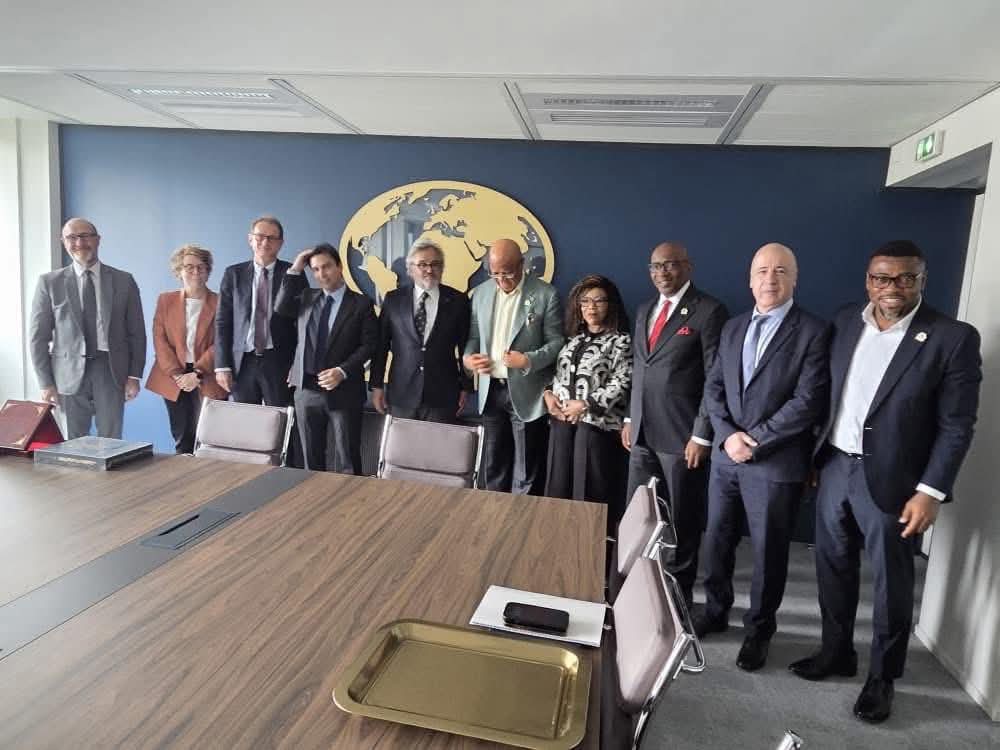
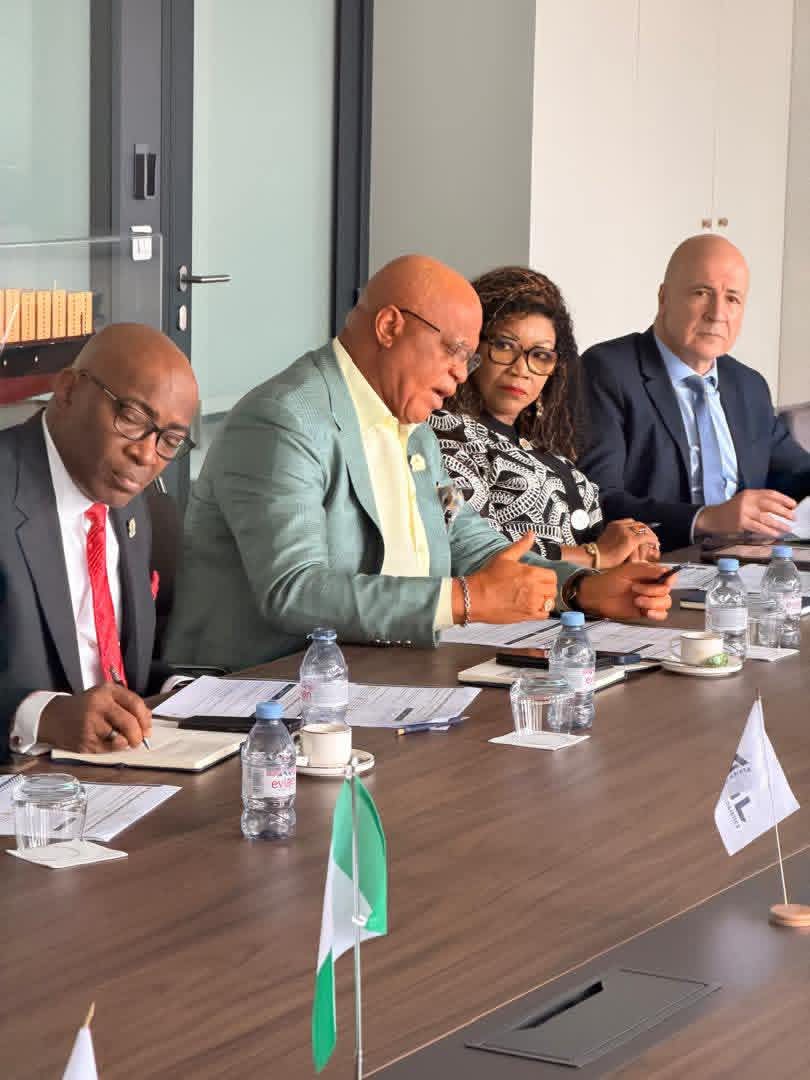
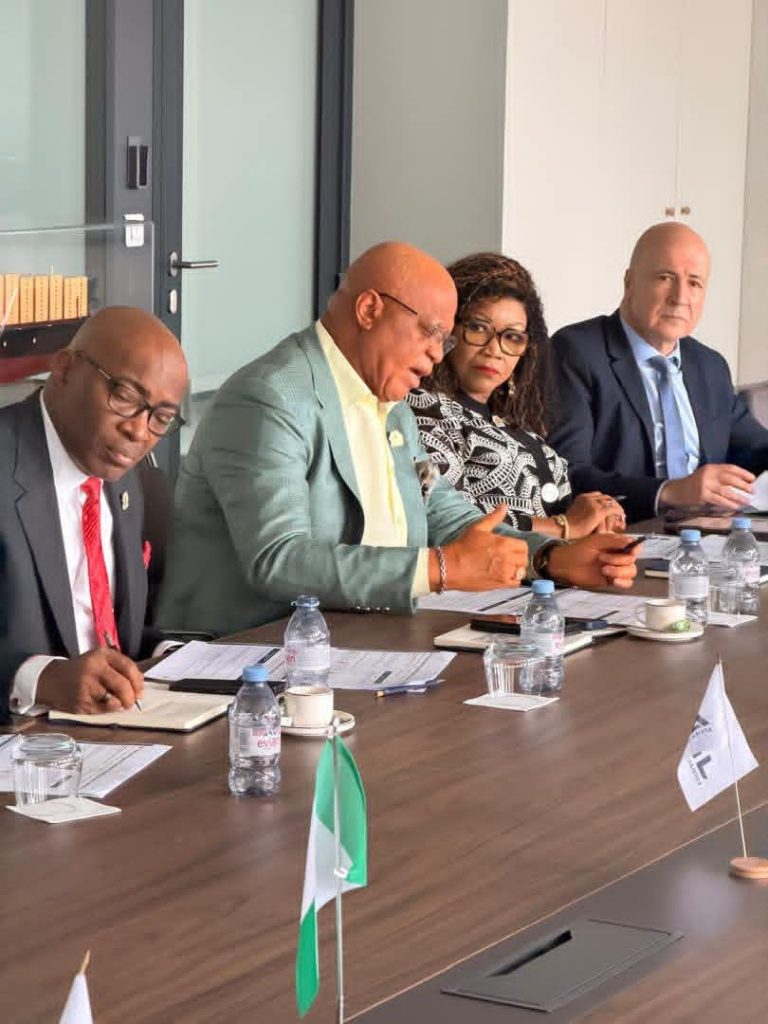
On June 5, 2026, Governor Umo Eno met in Paris with executives of Africa Global Logistics (AGL) Group and members of the Ibom Deep Seaport Technical Committee to review the Technical Feasibility Report prepared by Worley Parsons.
Discussions focused on implementation sequencing, investment mobilisation frameworks, and long-term operational sustainability.
According to the Commissioner for Information, Dr. Aniekan Umanah, the governor stressed the need for defined timelines, measurable milestones, and execution-driven planning to move the project beyond feasibility into delivery.
He said the administration’s priority is to ensure infrastructure translates directly into economic output.
From Port Concept to Economic System
Across global trade hubs, deep seaports function as industrial catalysts rather than standalone maritime facilities.
They attract logistics operators, manufacturing clusters, export processing zones, warehousing systems, and financial services linked to trade facilitation.
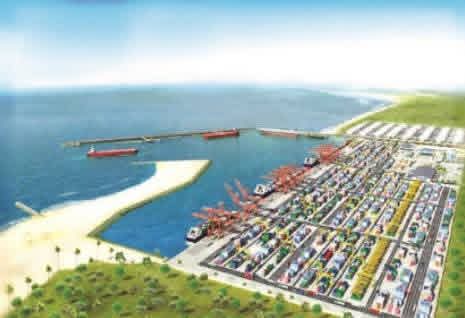
The Ibom Deep Seaport is being structured within this model.
It is expected to operate in synergy with the Liberty Free Trade Zone, the proposed Ibom Industrial City, Victor Attah International Airport, and expanding investments across agriculture, manufacturing, energy, tourism, and digital economy sectors.
Together, these assets are positioned to form an integrated production and logistics corridor aimed at expanding exports and improving supply chain efficiency.
Gulf of Guinea Trade Advantage
The Gulf of Guinea remains a critical maritime corridor linking West and Central African economies to global shipping routes.
Akwa Ibom’s coastal location provides direct geographic access to this corridor, placing it within competitive reach of regional trade flows.
A functional deep seaport in the state could strengthen trade linkages with Cameroon, Equatorial Guinea, Gabon, and other Central African markets, while easing pressure on existing Nigerian port infrastructure.
For exporters and manufacturers, this translates to shorter shipping cycles, reduced inland logistics costs, and expanded market access.
For the government, it implies improved trade revenues and foreign exchange inflows. For investors, it offers proximity to emerging industrial clusters.
Governor Umo Eno’s Economic Model
Since assuming office, Governor Umo Eno has pursued a development strategy anchored on infrastructure-led industrialisation, private-sector participation, and economic diversification.
The approach prioritises the creation of interconnected economic assets capable of generating sustained commercial activity rather than isolated public projects.
The Ibom Deep Seaport represents one of the most significant expressions of that strategy, with the potential to anchor long-term industrial growth in the state.
Regional Spillover Potential
While located in Akwa Ibom, the project carries wider implications for the South-South and South-East regions.
Manufacturing hubs in Rivers, Delta, Bayelsa, Cross River, and Edo states could gain improved export logistics access.
Industrial and trading networks in the South-East could also benefit from reduced congestion and more efficient shipping routes.
Economists often classify such infrastructure as catalytic, where value is generated less by direct port activity and more by the industrial ecosystems it enables.
Local Expectations in Oron
In Oron Federal Constituency, anticipation around the project remains high.
Mr. Nyong Effiong Nyong, a petroleum marketer, said the seaport could attract new investments and expand commercial activity across the coastal axis.
He noted that it reflects a long-term development approach with the potential to reshape local economic structures.
At Uya Oron Junction, trader Mrs. Angela Etim said the project could restore commercial relevance to the area while creating new opportunities for small businesses and young entrepreneurs.
Execution as the Decisive Factor
Despite its scale and ambition, the project’s outcome will depend on execution capacity.
Key variables include financing structure, regulatory coordination, supporting infrastructure development, and sustained private-sector confidence.
The Paris engagement formed part of efforts to strengthen these components.
Governor Eno was accompanied by the Chairman of the Technical Committee and former Director-General of the Nigerian Maritime Administration and Safety Agency, Mrs. Mfon Usoro; Secretary to the State Government, Prince Enobong Uwah; Commissioner for Science and Digital Economy, Dr. Frank Ekpenyong; Managing Director of Hensek Integrated Services, Engr. Uwem Okoko, FNSE; and other officials.
Their focus, according to officials, is to accelerate the project toward bankable implementation.
Outlook
The economic significance of the Ibom Deep Seaport will ultimately be measured not in feasibility reports but in operational outcomes.
These include expanded exports, industrial investment inflows, logistics efficiency gains, job creation, and increased subnational revenue generation.
As Nigeria’s trade volumes continue to expand, regional competition for logistics infrastructure is intensifying.
Akwa Ibom’s positioning signals a deliberate effort to secure a role in that emerging trade architecture.
If delivered as planned, the Ibom Deep Seaport could evolve into a major maritime gateway for Nigeria, strengthening trade competitiveness across the Gulf of Guinea and reshaping industrial geography in southern Nigeria.